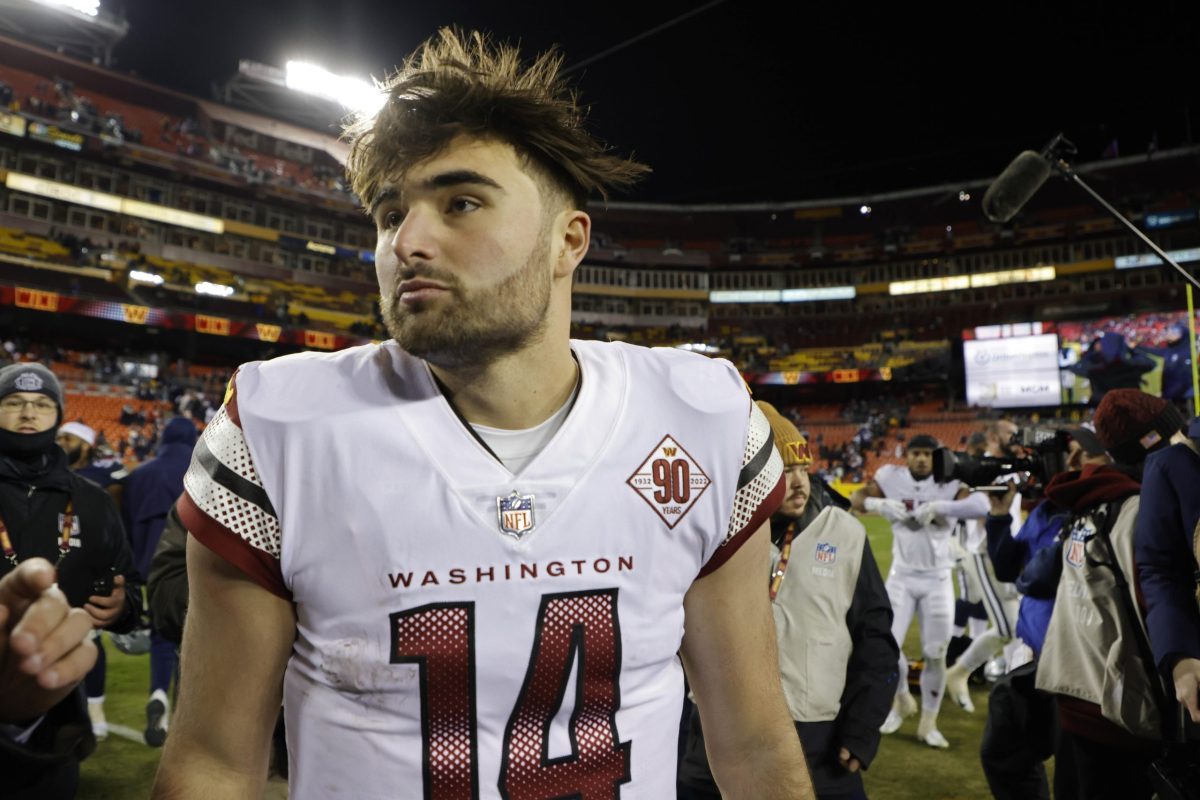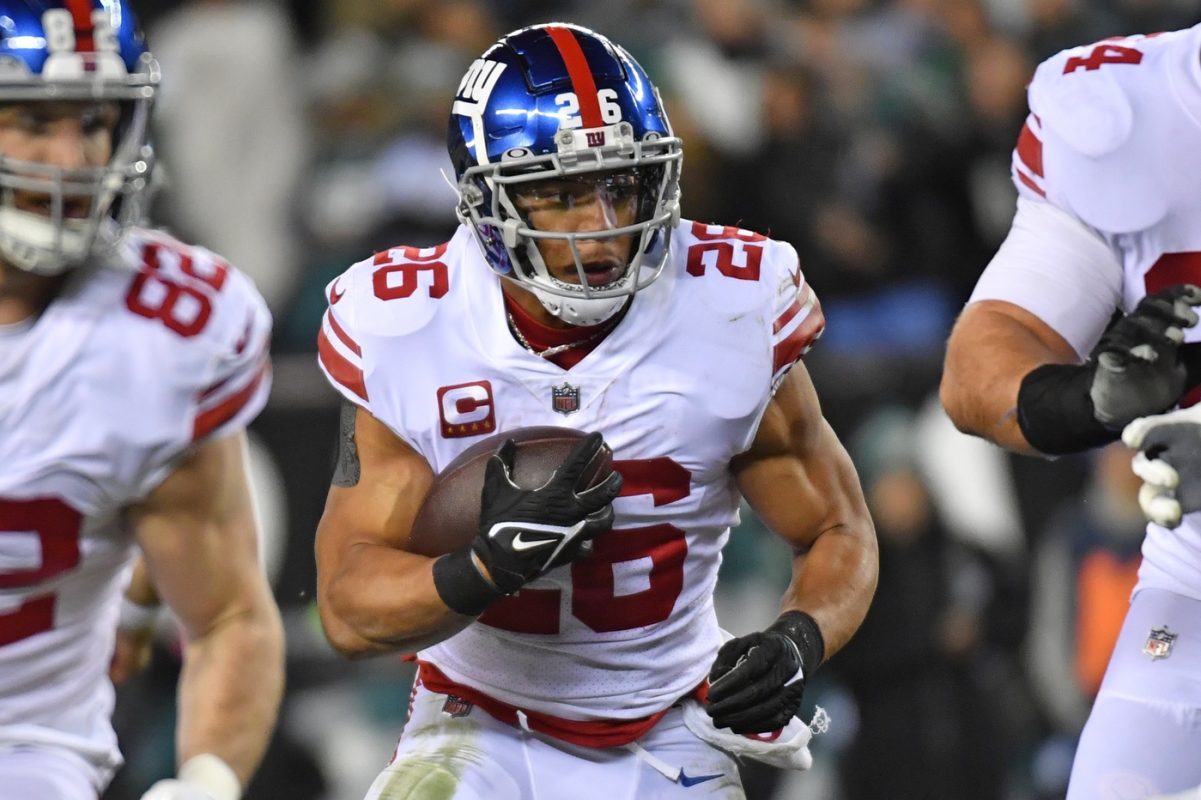


Washington Commanders owner Josh Harris offered an apology to his wife Thursday night as he described how a difficult football week followed him home.
Speaking at an Economic Club of Washington event, Harris reflected on the personal toll of ownership just days after the Commanders let a potential victory against the New York Giants slip away in overtime.
“I want to apologize to my wife for this last week. I’m really sorry,” Harris said.
Harris then described it as “a bad week, a bad Sunday” and said the experience stayed with him. Keim reported the remarks from the event Thursday evening.
The comments offered a glimpse of the disappointment surrounding Washington after Sunday’s 27-27 tie. While players and coaches have spent the week explaining the final possession, Harris described its effects from an owner’s perspective.
His apology was directed at his wife during a discussion of family life and sports ownership. It was not an announcement about the future of Washington’s coaching staff.
Josh Harris discusses the pressure of ownership
Harris appeared on a panel alongside Michele Kang, Ted Leonsis and David Rubenstein. Mark Ein moderated the Thursday event, which centered on leadership and the decisions facing sports owners.
That setting helps explain the personal nature of Harris’ comment. The program brought together people responsible for multiple franchises, giving them an opportunity to discuss experiences that extend beyond a team’s most recent result.
Harris also addressed the difficulty of balancing supporters’ expectations with building a team over time. In a separate report from the discussion, Harris had an observation that fans’ shorter timelines create pressure for owners to make immediate decisions.
At the Economic club event, Josh Harris talks about ownership and how it consumes your family. He said, "I want to apologize to my wife for this last week. I'm really sorry. It was a bad week, a bad Sunday…. Look, that stuff stays with you."
— John Keim (@john_keim) October 16, 2026
Those remarks give the apology a broader context: Harris was discussing the demands of the job, including the tension between short-term results and a longer view. They do not establish that Washington has decided to change its roster strategy or make a personnel move.
For the Commanders, however, the timing made Sunday’s finish an unavoidable backdrop. A game they had opportunities to win remained a subject of discussion four days later.
How Washington lost its chance to beat the Giants
Washington’s frustration went beyond the fact that the game ended without a winner. The Commanders held a 14-point fourth-quarter lead and later reached field-goal range in overtime.
The offense was at the Giants’ 24-yard line with no timeouts remaining when it attempted to improve its position. Instead, Washington finished the afternoon without giving kicker Drew Stevens a final attempt.
Here’s how the opportunity developed in the closing possession: Treylon Burks gained 13 yards on a reception, and Rachaad White followed with a two-yard run. Jayden Daniels then failed to gain yardage on the next play, leaving the offense racing to stop the clock.
Washington could not get the ball snapped and spiked before time expired. The missed opportunity left the Commanders with a tie despite having worked themselves into a position to attempt the winning kick.
That distinction matters when evaluating the reaction. Washington was not simply lamenting an unsuccessful field goal or a difficult final throw. It never reached the kick that the preceding plays had made possible.
Jayden Daniels takes responsibility for the finish
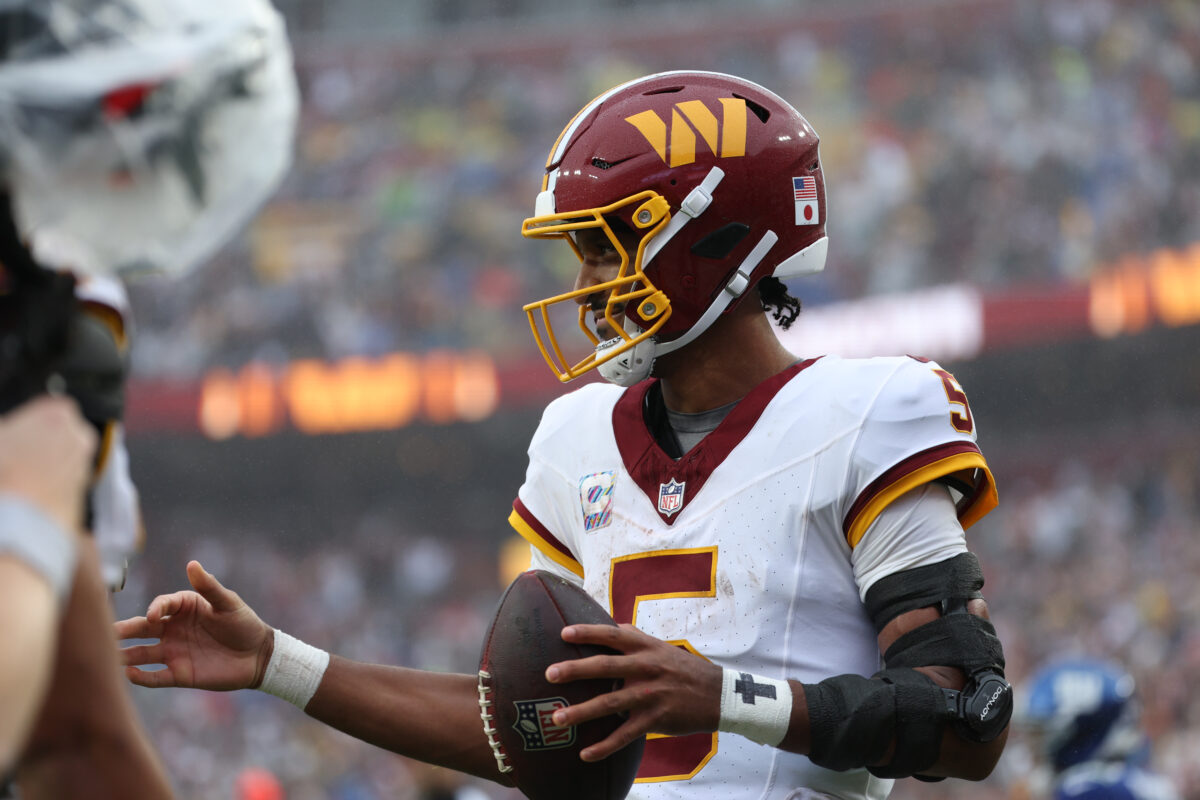
Daniels addressed his teammates before Washington began preparing for San Francisco, taking responsibility for his role in the ending. In Thursday’s team practice report, he described how the mistake lingered after the game.
“We tied, but it was a fail in my eyes, and I know I’m better than that,” Daniels said.
The quarterback said offensive coordinator David Blough had communicated the circumstances during the drive. With no timeout available, the offense needed a play that stopped the clock or an immediate response that preserved time for the kick.
Daniels also said he had been thinking about the play at night and considering what he should have done differently. He defended the coaches while emphasizing his own responsibility to recognize the situation on the field.
His teammates supported him, and backup quarterback Marcus Mariota encouraged him to learn from adversity without allowing it to dictate what happened next.
Washington’s task now is to carry that response into its preparation rather than continue replaying the same mistake.
Dan Quinn identifies what the Commanders must correct
Quinn had already addressed the sequence in his Monday news conference. He pointed to the time lost between plays and the team’s execution while accepting responsibility himself.
“It was a breakdown that can’t happen,” Quinn said.
His explanation included the communication chain between the head coach, offensive coordinator and quarterback. The necessary information included timeouts, field position and the distance required to give the kicker a chance.
Quinn also questioned the time spent substituting. Washington needed to get organized faster, and he said the offense did not need to make that substitution in the first place.
Those are specific corrections for the coaching staff to address. Acknowledging responsibility matters, but the next step is getting the decisions and communication to work under the same time pressure that exposed the problems Sunday.
The ending also overshadowed a productive return by Daniels following his dislocated elbow. He finished with 17 completions on 25 attempts for 199 yards, plus 103 rushing yards and two rushing touchdowns.
His performance gave Washington reasons for encouragement, even as the final possession demanded scrutiny. The Commanders will get their next opportunity to respond when they visit the 49ers on Monday, Oct. 19, at Levi’s Stadium.
For Harris, Thursday’s appearance showed how far Sunday’s disappointment extended. For the team, the more consequential response will come when another game presents a situation it has to manage correctly.