
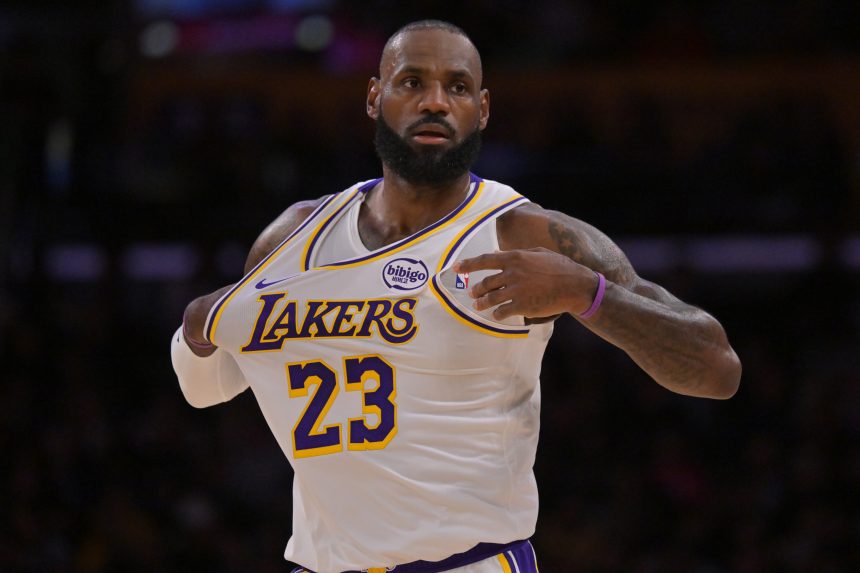
The Los Angeles Lakers have spent the past week being told LeBron James would probably be back. The latest reporting complicates that picture considerably. With the 2026 NBA Draft set for Tuesday and free agency opening June 30, ESPN’s Ramona Shelburne reported that James has not committed to returning to Los Angeles, and that the conversations between his camp and the front office have barely moved past pleasantries.
It is a notable shift in tone. Earlier in the offseason, the prevailing read around the league was that James intended to play a 24th season and that a Lakers reunion was the likeliest outcome. Shelburne’s update reframes that assumption right as the Lakers head into the two most consequential weeks of their summer.
What Ramona Shelburne reported
Speaking on “SportsCenter,” Shelburne said the Lakers and James’ representatives have had initial contact, but that James has not even fully committed to playing next season, let alone to Los Angeles. She characterized the dialogue between the two sides as “keeping in touch,” adding that no salary figures have been discussed and that the situation is best understood as James still weighing his options.
Those options, per Shelburne, include retirement and other teams. The Lakers hold one built-in advantage in the meantime: As his current team, they are the only club permitted to negotiate with James before the market opens on June 30. That exclusive window is the lever the front office has to work with, and at the moment there is no indication it has produced anything concrete.
The uncertainty is not coming from declining production. James made the All-Star team last season and averaged 20.9 points, 7.2 assists, 6.1 rebounds and 1.2 steals per game while shooting 51.5 percent from the field across 60 games. When Doncic and Reaves missed time late in the year, he carried the offense himself. The hesitation, in other words, is about fit, money and motivation rather than whether he can still play.
The money problem
The core obstacle is financial. James earned $52.6 million last season after exercising his player option, and no one around the league expects the Lakers to come anywhere near that figure again. According to ESPN’s Dave McMenamin, the Lakers could technically offer a three-year deal worth up to $182 million, but the realistic number is a one-year arrangement somewhere in the $20 million to $30 million range.
That gap is the heart of the standoff. Even a $30 million salary would represent roughly $22 million less than James made a year ago, and his camp has signaled it will not accept a steep discount without a credible plan to compete attached to it. The market does not give him much leverage to push the figure higher, either. McMenamin reported that the Golden State Warriors, viewed as the most realistic alternative, could only offer the $15.1 million non-taxpayer mid-level exception, which is about $37 million below his most recent salary.
So the Lakers are negotiating against a soft market, and James is weighing a significant pay cut against teams that cannot match Los Angeles regardless. That dynamic should favor a deal in theory. The complication is that the Lakers have other places they need to spend.
Luka Doncic’s demand makes it harder
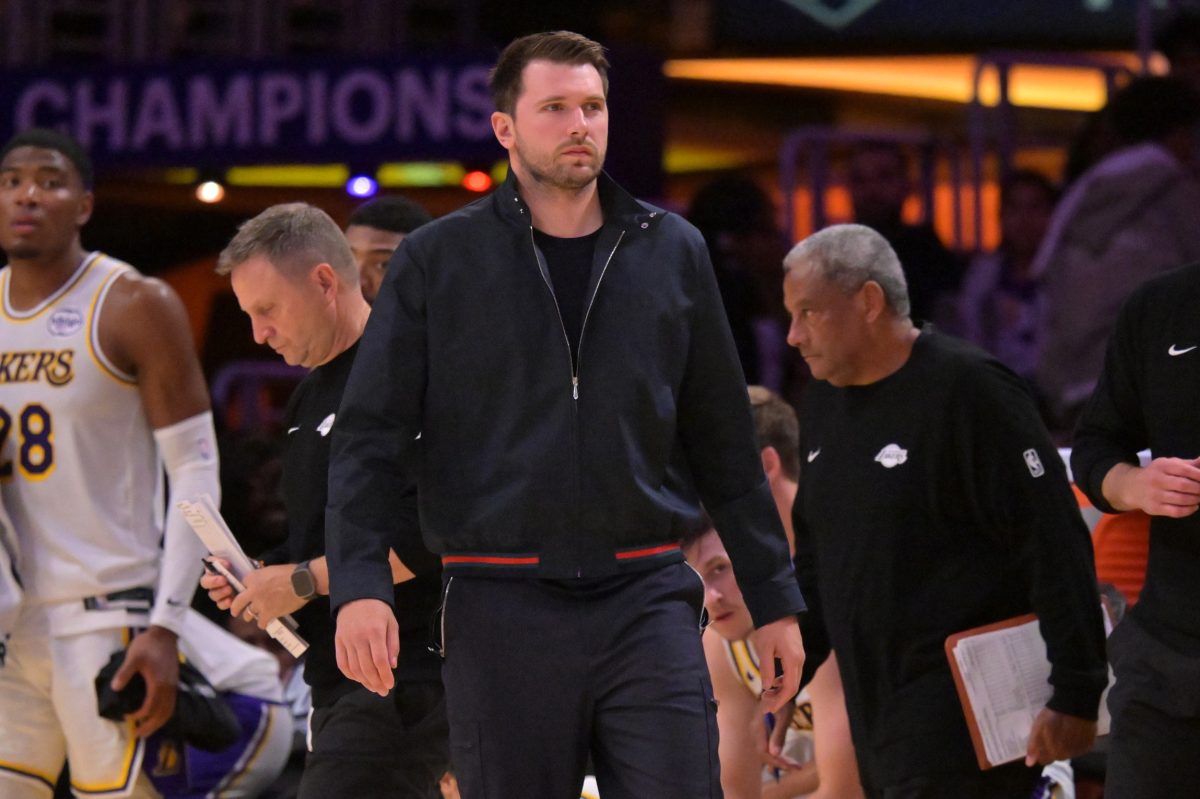
This is no longer LeBron James’ team to build around, and the front office is not pretending otherwise. Doncic led the league in scoring at 33.5 points per game and finished fourth in MVP voting before a hamstring injury ended his postseason, and he has made one roster priority clear since the day he arrived in Los Angeles: He wants an elite center.
That preference shapes everything. McMenamin reported that Doncic’s “first and foremost desire is an A-list center,” with restricted free agents Jalen Duren and Walker Kessler among the names who would satisfy that directive. Pursuing one means protecting cap flexibility, which is difficult to do while also paying James a premium.
The Lakers also have to resolve Austin Reaves, who is expected to decline his $14.9 million player option and hit the market after a career year of 23.3 points, 5.5 assists, 4.7 rebounds and 1.1 steals per game on 49.0 percent shooting. Los Angeles can offer Reaves a five-year deal worth up to $241 million, and Pelinka has publicly stated he expects him back. Between a max for Reaves, a center for Doncic and the existing center group of Deandre Ayton and Jaxson Hayes to sort out, the math around a LeBron number gets tight quickly.
There is also the draft. The Lakers hold the No. 25 pick on Tuesday, one of three tradeable first-rounders along with their 2031 and 2033 selections, giving them another avenue to add to the roster or move into a deal.
The respect subplot
Money is not the only friction point. Shelburne referenced reporting from McMenamin that James has not felt fully respected for the sacrifices he made in accepting a complementary role behind Doncic and Reaves. That framing helps explain why a pay cut is not a simple yes, even if the dollar figure exceeds what any rival could offer.
The tension has visible history. As Sports Illustrated noted, Pelinka handed the game ball to coach JJ Redick for his 100th win this past season rather than to James, on the very night James became the winningest player in league history. James reportedly took it as the organization undervaluing him. His agent, Rich Paul, downplayed the episode, but the broader friction has not disappeared, and it now sits underneath a negotiation where the Lakers are asking him to take less.
Paul has kept his own posture measured. He told ESPN’s Pat McAfee that “about 10 to 12” teams had inquired about James, while stressing that the decision would be a family one and that nothing should be read into the rumor mill until he and James actually sit down.
What comes next
The shape of the next eight days is straightforward even if the outcome is not. The Lakers can negotiate exclusively with James until June 30, after which the rest of the league gains access. If the two sides cannot agree on both a number and a roster vision before then, the door opens for the Warriors, a possible Cleveland reunion or, in the scenario fans are now taking seriously, no return at all.
For the Lakers, the draft and the James decision are not separate problems. How they value the No. 25 pick, whether they chase a center in a trade and how aggressively they pursue Reaves all hinge on how much of their cap they expect to commit to a 41-year-old. Right now, by Shelburne’s account, they do not have that answer, and the player at the center of it has given them little to plan around. The clock that matters most is the one that runs out June 30.