

The opening night of NBA free agency belonged to LeBron James, whose decision to leave the Los Angeles Lakers reshaped the top of the market the moment the window opened.
Underneath that headline, though, a quieter and more consistent pattern took hold across the league. While the biggest names sorted out their futures, several would-be contenders spent the evening doing something far less dramatic and arguably more telling: stockpiling proven shooting.
The moves arrived in a steady wave, and they shared a common logic. In a league where floor spacing decides playoff series, the fastest way for a good team to raise its ceiling is to add shooters who punish defenses that load up on stars.
That is precisely what a handful of teams did before the clock struck midnight, and the pattern is worth pulling out of the noise. As the star dominoes fell at the top of the market, front offices in the tier just below moved almost in unison, treating reliable perimeter shooting as the resource most worth chasing.
Houston lands a playoff-tested scorer
The night’s most notable shooting addition came in Houston, where free agent guard Bogdan Bogdanovic agreed to a one-year deal with the Rockets. Bogdanovic enters his 10th NBA season as an established, playoff-tested scorer and Rockets executives recruited him directly once the market opened. For a franchise that has climbed the Western Conference on defense and athleticism, the signing addresses a specific need rather than a splashy one.
Houston’s young core has at times lacked reliable half-court shooting, the kind that keeps an offense afloat when the transition game stalls and the game slows down in the spring. A veteran who can both create his own look and knock down catch-and-shoot threes gives the Rockets a different type of weapon in exactly those moments.
On a one-year commitment, it is also a low-risk bet, letting Houston add experience without tying up future flexibility on a roster still discovering its ceiling. For a team that believes its championship window is opening, a proven postseason shooter is a logical piece to add before the price climbs.
Phoenix and Philadelphia shore up the margins
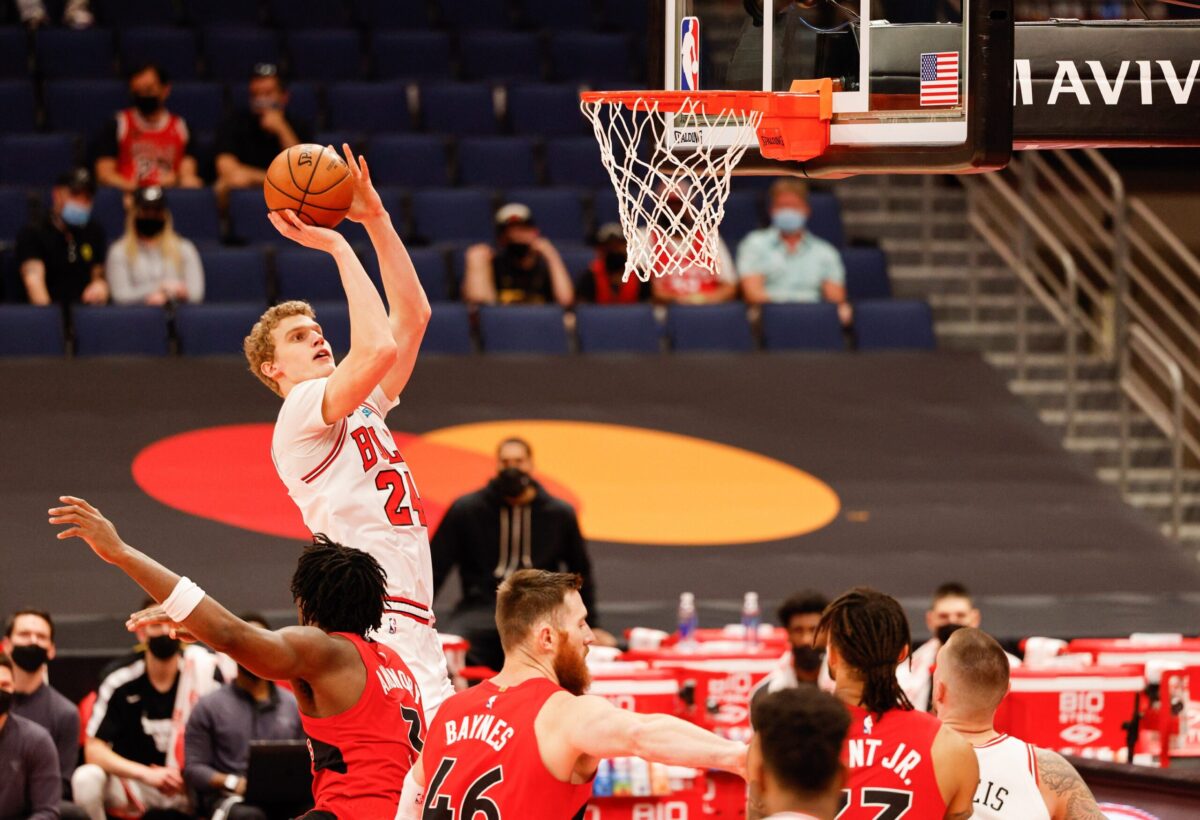
Two more contenders added rotation shooting at a reasonable price. Luke Kennard, one of the league’s most efficient perimeter shooters, agreed to a two-year, $13 million deal with the Phoenix Suns that includes a player option for the second season. Kennard’s value has always been rooted in his accuracy, and for a Suns team that needs to squeeze the most out of every possession, a specialist at that number is a sensible use of limited resources.
In Philadelphia, the 76ers landed forward Dean Wade on a four-year, $39 million deal, with several contenders reportedly pursuing the former Cleveland Cavaliers forward before he chose Philadelphia. Wade is not a pure gunner, and that is the point.
His appeal is the blend of frontcourt size, defensive versatility and enough shooting to keep him on the floor when playoff rotations tighten. That two-way profile is why a role player drew competitive interest across the league, and why the 76ers were willing to commit real term to keep him.
The two deals sit at opposite ends of the cost spectrum, and together they show the range of the strategy. Phoenix bought a pure shooter cheaply and kept an escape hatch with the player option, while Philadelphia paid up for a sturdier, more versatile piece it clearly viewed as a rotation lock. Both, in their own way, were spending on the same thing, and both were willing to move quickly to secure it.
Miami runs the same play
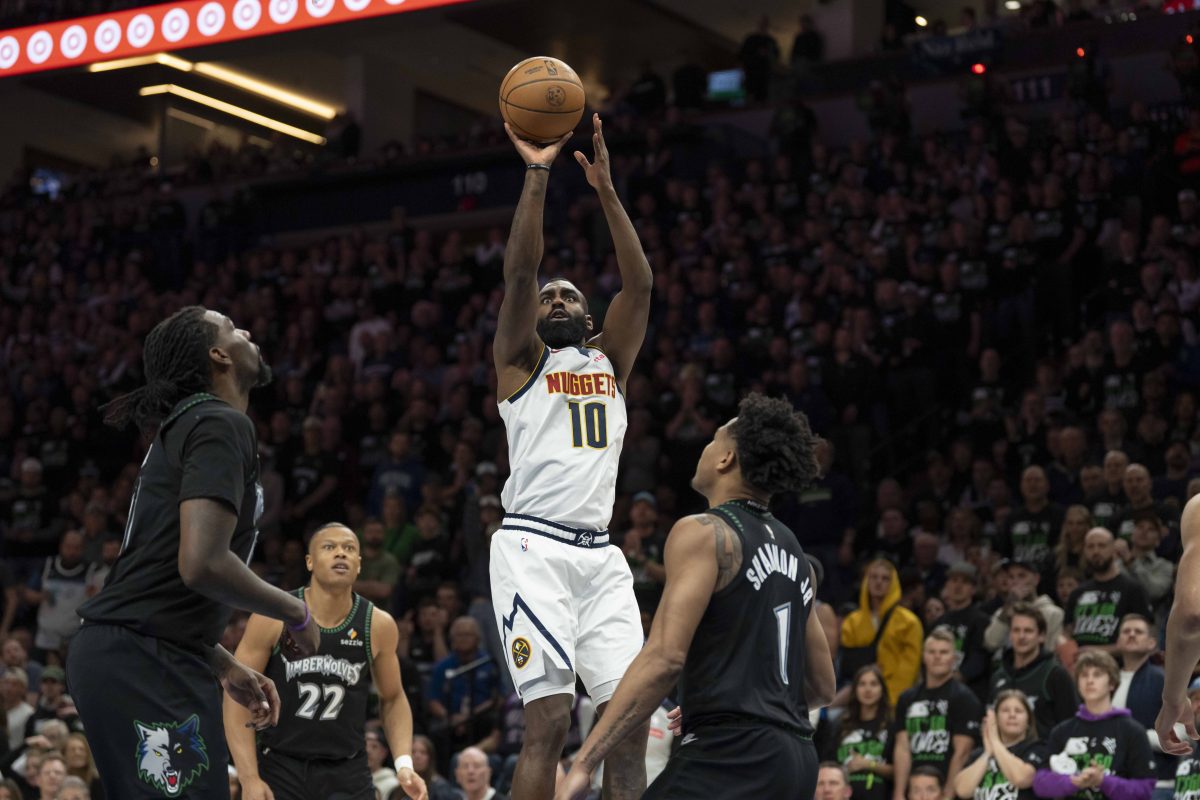
Miami’s version of the idea arrived earlier in the evening, when the Heat agreed to terms with sharpshooter Tim Hardaway Jr. to add spacing around Giannis Antetokounmpo. The logic was identical, if the star at the center of it was bigger: Give the offense’s engine more room to operate by surrounding him with shooters defenses cannot ignore.
The through-line connecting Miami, Houston, Phoenix and Philadelphia is unmistakable. None of these teams chased a marquee name, and all of them left the opening night of free agency with more shooting than they had that morning. On a night defined at the top by star movement, the middle of the market told a more disciplined story.
The shooting rush was one thread in a broader early run on rotation talent, as teams raced to lock up depth before the market thinned. The Brooklyn Nets, for instance, secured guard Keon Ellis on a two-year, $18 million guaranteed deal, another example of a front office moving quickly to keep a rotation piece off the open market. The theme of the night was less about splash than about certainty, with teams paying to remove useful players from a shrinking pool.
Why shooting was the currency of the night
There is a reason the role-player market moved this quickly. Once the biggest names begin settling into their destinations, the smartest front offices pivot to the pieces that swing close playoff games, and in the modern NBA that means shooting above almost everything else. Spacing multiplies the value of a star, and a defense that cannot afford to leave shooters open is a defense forced to surrender driving lanes and open rims.
Star movement feeds that demand directly. Every time a marquee player changes teams, a new roster inherits the job of building around him, and the first thing a new centerpiece needs is spacing. James landing somewhere fresh, and the trades that reshaped other contenders this week, quietly raised the number of teams shopping for the same commodity at once. The result was a compressed market in which shooting was bid up early and secured fast.
The economics of the current collective bargaining agreement sharpen that logic. Teams pressed against the luxury-tax aprons have fewer avenues to add talent, with their access to exceptions and trades increasingly restricted the more they spend. That environment turns a cost-controlled shooter into one of the most contested resources in the league, because a specialist on a modest deal is often the most meaningful upgrade an expensive roster is still allowed to make. It is no accident that so much of the opening-night business centered on shooting at the mid-level and below.
For teams operating without max-level cap space, that math turns a proven shooter into one of the best investments on the board. A specialist on a modest deal can reshape a rotation more than a bigger name on a bloated contract, and opening night showed several contenders acting on that belief at nearly the same time. It is also a reminder that most of these agreements are not yet official, with the league’s annual moratorium running from July 1 to July 6 before deals can formally be signed.
None of it will lead the highlight shows, which will stay fixed on where the stars land. But roster building is rarely won on the marquee, and the teams that spent the night adding shooting made the kind of quiet progress that tends to matter in April and May.
Opening night is remembered for its blockbusters, and this one had plenty of them. The more repeatable lesson, though, came from the margins, where a cluster of contenders treated shooting as the first thing worth spending on. James and the rest of the stars will ultimately decide how this offseason is graded, but a handful of teams already left the opening night a little better built for the games that decide championships.