
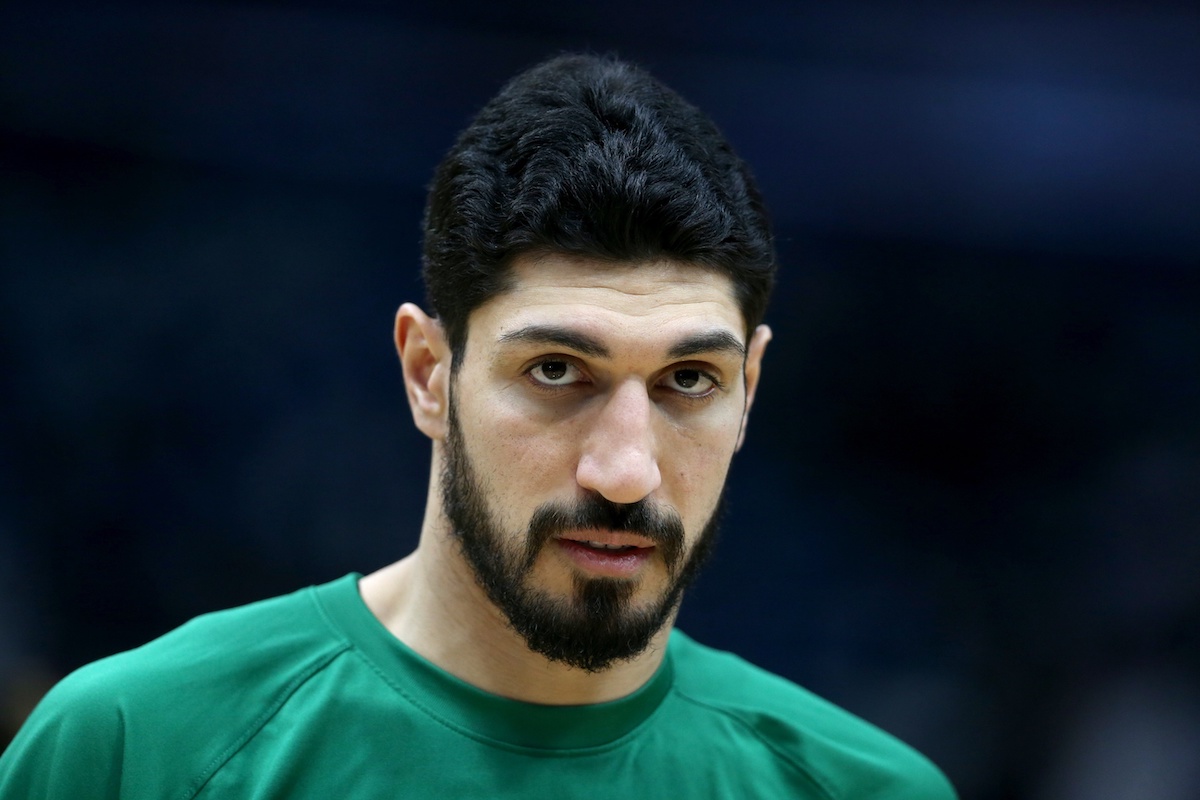
Former NBA center Enes Kanter Freedom announced Friday that he is declaring himself a prospect for the 2027 WNBA Draft, releasing a video statement that framed the move as a test of the league’s eligibility rules — and immediately reigniting the debate over transgender athletes in women’s sports that has surrounded the WNBA for weeks.
After careful consideration and reviewing the current eligibility guidelines,
I’m officially declaring myself a @WNBA prospect.If simply declaring who you are is all that’s required, then I meet every single requirement necessary to compete in the WNBA.
My team and I have… pic.twitter.com/msncUZUT1J
— Enes Kanter FREEDOM (@EnesFreedom) August 7, 2026
The announcement came in a post on X at 12:56 p.m. ET, in which the 34-year-old said he had reviewed the league’s eligibility guidelines and concluded that nothing in them would prevent him from entering the draft. Whether that conclusion holds up is already in dispute: The league’s published rules do not appear to support it, and the WNBA had not issued a public response as of Friday evening.
What Kanter Freedom said
In the video, which showed him seated at a desk in an orange WNBA-branded sweatshirt, Kanter Freedom said his team had studied the league’s eligibility criteria and its framework around self-identification and inclusion, and that on the basis of those guidelines he was formally declaring for the draft scheduled for April 2027.
“I meet every single requirement necessary to compete in the WNBA,” he said in the accompanying post.
He acknowledged in the statement that his presence on a court would generate strong reactions, and insisted his intent was not to mock or disrespect any community. Instead, he characterized the move as a request that the league apply its own rules evenly — rules, he argued, that reflect values many WNBA players and coaches have publicly championed.
He closed the statement by saying he would see the league at training camp. The announcement drew an immediate and sharply divided response.
Conservative outlets celebrated it, with OutKick’s Jon Root framing it as pressure on the league to clarify its position and quoting Riley Gaines calling the move “genius.”
Critics condemned it, with Mediaite’s Ahmad Austin Jr. characterizing the declaration as a stunt aimed at transgender athletes. Kanter Freedom’s own statement anticipated both readings, which is part of why the announcement traveled as far as it did within hours.
What the WNBA’s rules actually say
The central factual question — whether a 6-foot-10 man who played 11 NBA seasons can actually enter the WNBA draft — has an answer that does not favor the declaration.
The WNBA’s collective bargaining agreement limits league eligibility to players who are women, as TMZ Sports noted in its coverage Friday, though the outlet observed that the agreement does not spell out how the league defines that term. Kanter Freedom’s eligibility claim is not supported by the WNBA’s published rules.
That gap — a women-only eligibility standard alongside an undefined term — is precisely the space Kanter Freedom’s announcement is designed to occupy. His statement leaned on the league’s inclusion framework rather than any assertion about his own identity, and he did not say in the post that he identifies as a woman.
The league office, which has not addressed the announcement publicly, would presumably be the arbiter of any actual draft application, and nothing in Friday’s statement suggested one has been formally filed.
Until the WNBA responds, the declaration functions as a public challenge rather than a live roster question. The draft he named is roughly eight months away.
The Sophie Cunningham backdrop
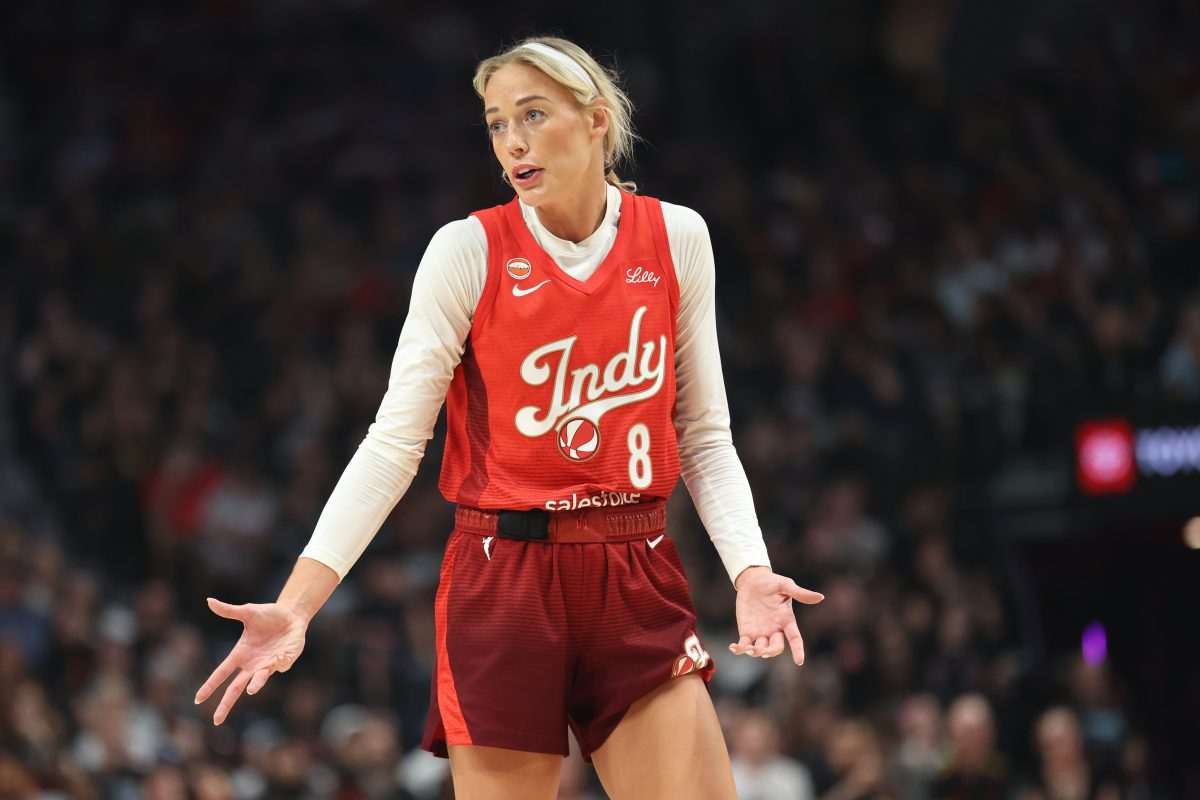
The timing of the announcement tracks directly to the controversy that has occupied the WNBA for much of the summer. Indiana Fever guard Sophie Cunningham recently spoke out on the subject of transgender athletes in women’s sports, saying in comments that she wanted to “protect young girls in a locker room” and opposing their competing against biological men.
Cunningham later stood by the remarks, describing her position as a matter of common sense. Those comments split the league’s public-facing voices and pulled the WNBA into a national argument it has so far declined to referee.
Reaction inside the league has run in both directions, and the league office has stayed out of the exchange publicly — the same posture it maintained Friday as Kanter Freedom’s announcement spread.
Kanter Freedom has been a vocal participant in sports-adjacent political fights since his playing career ended, and his media appearances in recent years have made him one of the most visible former players in conservative sports media.
Friday’s announcement fits the pattern of using his platform to force public questions the institutions involved would prefer to answer quietly, and the response it generated within hours suggests it landed as intended.
An 11-year NBA career, and what comes next
Kanter Freedom, who changed his name from Enes Kanter upon becoming a United States citizen in 2021, was the No. 3 overall pick in the 2011 NBA Draft and played 11 seasons for the Utah Jazz, Oklahoma City Thunder, New York Knicks, Portland Trail Blazers and Boston Celtics.
His NBA career ended when the Houston Rockets waived him in February 2022 shortly after acquiring him from Boston, and he has not played professionally since.
He has attributed the end of his career to his political activism, an assertion the league has never confirmed. Before the NBA, he was a heralded recruit who committed to Kentucky but never played for the Wildcats after the NCAA ruled him ineligible over payments he received from a Turkish club.
What comes next depends entirely on the league. The WNBA can respond publicly, quietly decline any application when the 2027 draft process formally opens or continue saying nothing — the approach it has taken throughout the Cunningham cycle.
Each path carries a cost the announcement was built to impose: a response elevates the challenge, silence extends the questions and a formal rejection would require the league to articulate the eligibility definition its own agreement leaves unstated.
For now, the only concrete fact is the declaration itself. The draft Kanter Freedom named is scheduled for April 2027, the league has published no mechanism by which he would be part of it, and the loudest unanswered question of the WNBA’s summer just got a second act.