

The NBA’s punishment of the LA Clippers arrived Wednesday as a list: five first-round picks, a $30 million fine, a suspended owner. The reason the league felt it could go that far arrived at the same time, in a 36-page summary of the independent investigation, and a day later it is the more revealing document.
It is not a story about a hidden bank transfer. It is a story about a franchise that wrote down what it was doing.
The NBA’s release describes a pattern of misconduct and points readers to the summary report prepared by Wachtell, Lipton, Rosen & Katz, which the firm has published on its own site. What follows is what that report says, as carried by the outlets that have gone through it, and what it leaves for the Clippers to deal with next.
The meeting Lawrence Frank wrote down
The report’s timeline begins with what did not happen. When Kawhi Leonard signed in 2019 and his uncle and business manager Dennis Robertson asked teams for benefits outside the rules, the Clippers did not comply, and the NBA cleared them at the time.
Within months, though, Robertson was back, pressing the team to help Leonard find roughly $10 million a year in additional income. Investigators found no evidence the club told him to stop or reported the requests to the league.
By April 2020, Robertson was complaining directly to Clippers management that nothing had materialized. The reason the report can describe that meeting in detail is that Lawrence Frank, the president of basketball operations, kept notes and retained them.
Those notes have Robertson dismissing the introductions team president of business operations Gillian Zucker had made as worthless and telling the room he needed to be paid. The same notes record Steve Ballmer’s answer.
According to the report, Ballmer told Robertson that he and the Clippers’ staff were “collective workers to try to help [Mr. Leonard] achieve his financial goals,” and Zucker assured Robertson that Ballmer would keep his word. Frank, whose notes made the case, appears to have been treated more leniently for cooperating.
Six days in June
Two months later, the introductions Robertson had complained about got better. Over a span of six days in June 2020, Zucker sent a series of emails connecting Robertson with three companies that were negotiating business with the Clippers: Boingo Wireless, Daktronics and Lockton, an insurance firm.
All three had endorsement deals with Leonard by the end of August, all three had paid him by September, and by August 2021 he had earned $18 million from them. Investigators did not accept Zucker’s account that the companies had asked for the introductions.
The report found no evidence for it and did not consider it credible that three separate companies would independently seek out Leonard within days of one another while the season was shut down for the pandemic. What it found instead was that each company reached a business agreement with the Clippers within weeks of the June emails, and that each signed a multi-million dollar consulting agreement with the team either before or on the same day its Leonard deal was finalized.
The Daktronics section is the sharpest. The scoreboard company, which went on to build the Intuit Dome’s halo board, believed that not doing business with Leonard could cost it the arena bid. Brian Windhorst characterized the report’s finding as the Clippers steering a kickback from a massive scoreboard contract to Leonard in the form of an endorsement, with the team even setting the terms.
The report repeatedly rejects the Clippers’ argument that they were acting as a permitted middleman and cites admissions from the companies themselves, he wrote.
How the Aspiration terms got written
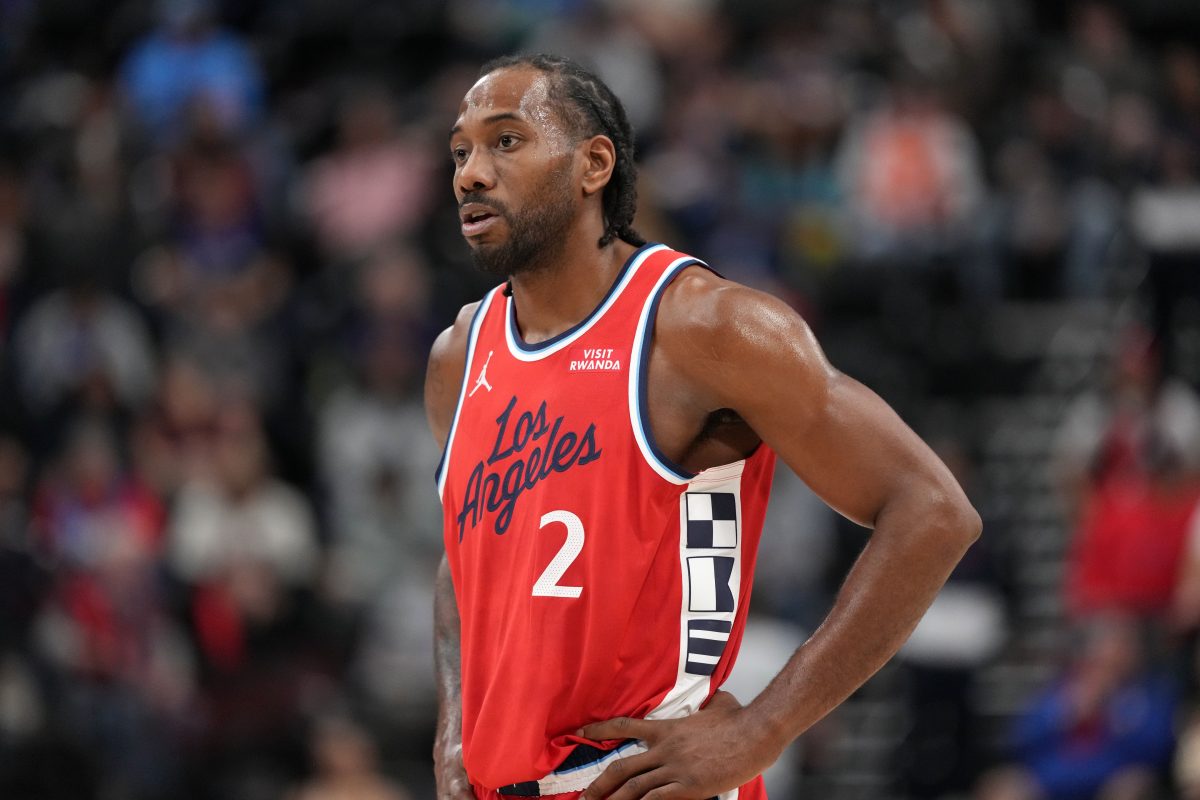
The best-known deal in the case, the $28 million Aspiration agreement first reported by Pablo Torre last September, gets its own paper trail. When Aspiration co-founder Joseph Sanberg told Zucker he wanted to explore an endorsement with Leonard, the report says she offered to bring in a business agent to structure it, an agent who at the time was under a retention agreement with the Clippers.
Zucker contacted that agent a day later. The agent’s internal email laid out the offer: $5 million in cash plus $7 million in stock per year for four years, as long as Leonard remained a Clipper.
The agent told investigators that neither the agent nor the agent’s team had come up with those numbers, and every relevant witness, Zucker included, agreed Sanberg could not have either, because he had no experience with player endorsements.
Investigators concluded Zucker had improperly passed along the financial terms. The NBA’s release says she also gave investigators false and misleading statements, which is why her one-year suspension is without pay.
Leonard’s own position sits uneasily against that section. His statement Wednesday said he signed the agreements in good faith and with “no knowledge of any intent on anyone’s part to circumvent the salary cap.”
The report, however, describes him as involved in the Aspiration negotiation, including a request to swap the cash and equity amounts.
Kawhi Leonard said he had no knowledge any of the endorsement deals he signed were to circumvent the cap. NBA fined him $700k + said he violated circumvention rules by pressuring Clippers for off-court income thru his uncle.
NBA's report specifies one instance Leonard got… pic.twitter.com/raQNQj9cPM
— Mike Vorkunov (@MikeVorkunov) September 3, 2026
Why the number is $30 million
The penalties look arbitrary until the report’s structure is applied to them. The most the league can fine a team for a single circumvention case is $7.5 million, and because investigators found improper arrangements with four separate companies, the league multiplied it by four.
The collective bargaining agreement also caps executive and owner suspensions at one year, so Ballmer and Zucker received the maximum available, and the five picks the league took were the Clippers’ only unprotected first-rounders without swaps or other strings attached.
History compounded it. The Clippers were fined $250,000 in 2015 over an unauthorized endorsement offer to DeAndre Jordan, and after the 2019 Leonard investigation cleared them they were warned and put through a rules seminar.
Wachtell’s report notes the league adopted a rule after 2019 requiring teams to report any improper solicitation, even one they reject. The April 2020 meeting happened after that rule existed.
The Clippers have promised to fight, but the report’s acceptance by Leonard and the players’ union mattered here, too. Because the NBPA signed on, the league avoided a neutral arbitrator the union could have demanded, closing the one internal channel through which the Clippers might have contested the findings.
The NBA’s release calls the penalties final and binding.
The vacuum at the top
The report also explains a strange fact about the Clippers this week: Nobody has been named to run them. The team has not accepted the punishment and therefore has not appointed an interim head of basketball operations, though general manager Trent Redden is the likely choice.
Frank’s six-month absence would carry him past the 2027 trade deadline but return him for the draft and for a 2027 free agency in which the Clippers project to have as much as $50 million in cap space. The ownership seat is harder.
Ballmer must designate an interim governor, and the Clippers’ alternate governor is Dennis Wong, who owns 1 percent of the team and was himself an investor in Aspiration, though the NBA’s release does not mention him. Wong put $1.99 million into the company nine days before Aspiration paid Leonard $1.75 million.
Ballmer’s attorney, David Kelley, told the league the owner is “exploring every legal remedy to address this gross injustice.” It is not yet clear whether the suspension takes effect immediately or whether Ballmer can ask a court to pause it.
What the report leaves open
The NBA’s release ends with a line that reads differently after the report: Wachtell continues to receive information, and the league will consider further action. The Daktronics thread is already moving outside the league’s jurisdiction.
On its earnings call Wednesday, the company’s acting chief financial officer, Howard Atkins, said it had received information requests from the NBA and that the SEC “is seeking information from us regarding the company and Mr. Leonard.”
There is one path back for the Clippers, and it runs through the opposite of a fight. When Minnesota lost five first-round picks in the Joe Smith case in 2000, the league returned two of them three years later, and the Timberwolves earned that by not contesting the punishment.
The franchise that wrote everything down now has to decide whether to litigate a report built from its own records, or to sit quietly for five years of league monitoring and hope for the same mercy.
The Raptors trade that was frozen in July is expected to close within days regardless. Leonard is leaving with a $700,000 bill and his contract intact.
The Clippers are staying with the paperwork.