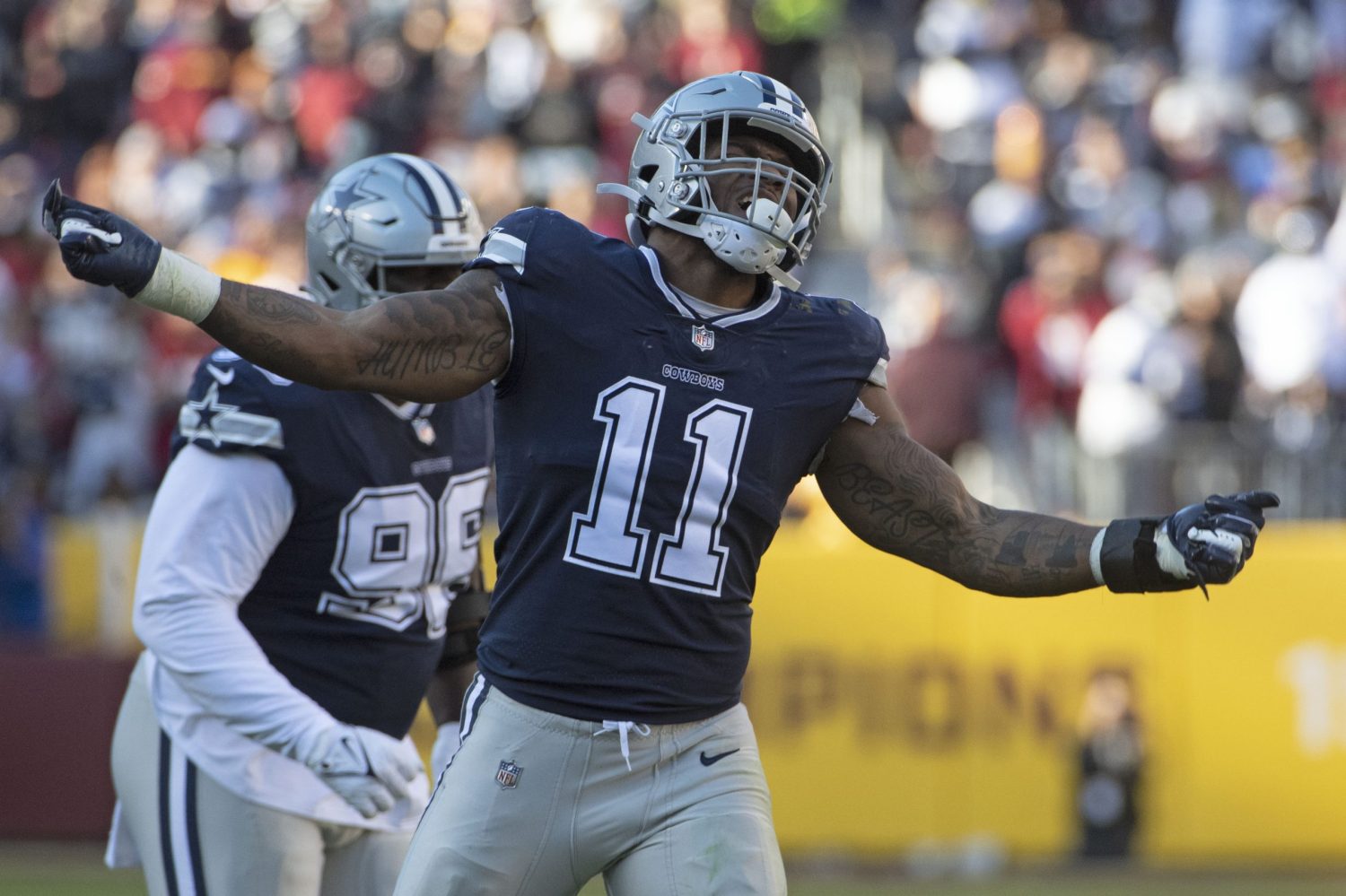

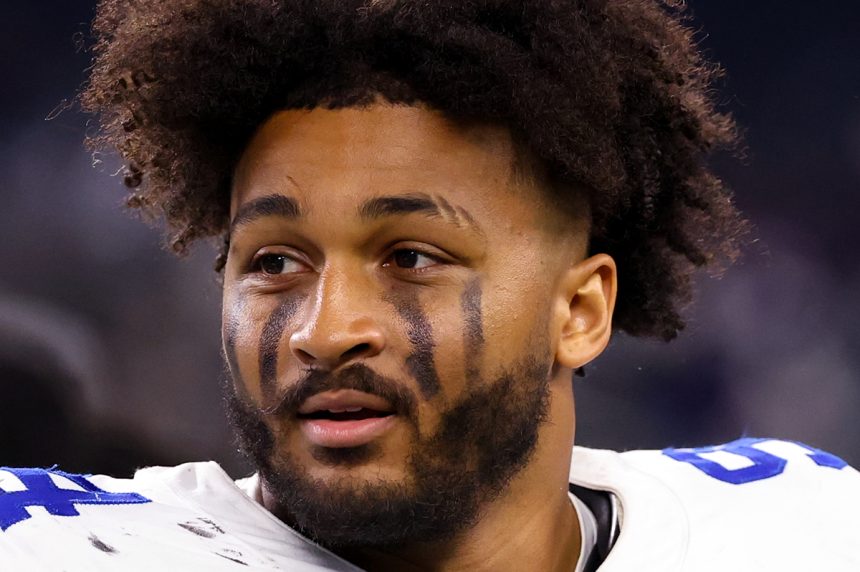
The Dallas Cowboys received painful confirmation on Tuesday of something brain researchers have warned about for years.
Marshawn Kneeland, the defensive end who died by suicide in November 2025 at the age of 24, has been posthumously diagnosed with chronic traumatic encephalopathy, the degenerative disease tied to repeated head impacts in contact sports.
His family chose to make the finding public, they said, so that his story might help others understand what athletes in violent games can be quietly carrying.
What the diagnosis found
Researchers at the Boston University CTE Center identified Stage 1 CTE, the earliest point on the disease’s four-stage scale, after Kneeland’s family donated his brain for study through the Concussion & CTE Foundation.
Because the condition can only be detected in brain tissue, a post-mortem examination remains the sole way to confirm it. The four stages run from the mildest changes at Stage 1 to the most extensive damage at Stage 4.
That an early-stage case turned up in someone so young is, in its own grim way, part of what makes the finding useful to science. Dr. Ann McKee, who directs the Boston University CTE Center, said the result did not surprise her.
“I was not surprised to find CTE in the brain of Mr. Kneeland,” she said, noting that her lab has found the disease in close to half of the athletes it has studied who died before turning 30.
Each donation, she added, brings researchers nearer to the goal that has long eluded them: identifying CTE in living patients rather than only after death, and one day treating it.
Why Kneeland’s family chose to speak
The decision to release the results belonged to the family, and they were direct about their reasoning. In a statement shared through the foundation, they said the diagnosis does not lessen the grief of losing him, but that it offers context for the struggles he had been facing — and they asked that he be remembered for the person he was, not for how his life ended.
“We continue to remember Marshawn with compassion for the person he was,” the statement read, before closing with the words One Love.
Kneeland’s relatives, including his girlfriend, Catalina Mancera, also asked for privacy as they grieve and said they would not be sitting for interviews. Their willingness to share the results, reported by ESPN, reflects a wider shift among the families of young athletes, who increasingly treat brain donation as a way to contribute to a field still filling in its earliest chapters.
What researchers say the case reveals
For the scientists involved, the significance ran past a single player. Kneeland came up entirely inside the modern era of the sport, in an age of concussion protocols and upgraded helmet technology, and he developed the disease anyway. That, argued Dr. Chris Nowinski, the foundation’s chief executive, is precisely the point people miss.
“Concussion protocols do not prevent CTE,” he said, because the disease is driven by the steady accumulation of head impacts rather than by diagnosed concussions alone.
His proposed remedy is unambiguous: cut both the number and the severity of head impacts at every level of the game, from youth leagues upward.
The exposure often begins early. Kneeland started playing tackle football at 7 years old, according to the foundation, a detail that captures how many seasons of contact a professional can absorb long before he ever reaches the NFL. The larger research picture remains stark.
In a widely cited 2023 study, the Boston University center reported CTE in 345 of 376 former NFL players it examined — roughly 92 percent — though scientists note that donated-brain samples lean toward families who already suspected something was wrong, which limits how far the figure can be generalized.
An important caveat about CTE and suicide
The researchers were careful to draw a line that is easy to blur, and it belongs in any responsible account of this story. A CTE diagnosis after death does not establish why a person died.
The Boston University center emphasized that suicide arises from many interacting factors, and stated plainly that a post-mortem CTE finding should not be regarded as the cause of a suicide, nor is it recognized as a risk factor for one.
What the disease can do is help explain symptoms someone may have wrestled with — memory problems, shifts in mood, trouble with impulse control — without offering a single, tidy explanation for a death. That distinction matters for accuracy, and it matters for the many families working through similar losses.
How Dallas has carried his memory
Within the Cowboys organization, Kneeland has stayed present since his death. He was a second-round pick in 2024 out of Western Michigan and was in his second professional season when he died, and teammates and coaches spoke of him warmly in the months that followed.
The team also established the Marshawn Kneeland Memorial Fund to support Mancera and the couple’s child, a boy named Makhai who was born in mid-June. Head coach Brian Schottenheimer, who has stayed in touch with the family, put the club’s commitment simply.
“When you’re part of our family, you’re family for life,” he said, adding that the players had been eager for the baby’s arrival.
A story the family wanted told
Kneeland’s diagnosis sits at the meeting point of two hard truths the sport is still reckoning with: that CTE keeps appearing in players raised under football’s most safety-conscious era, and that it is being found in athletes younger than researchers once anticipated.
By releasing the findings, his family turned a private loss into a public contribution — a data point, and a warning, offered in the hope that it reaches someone who needs it.
For those trying to understand the warning signs of CTE or seeking support, the Concussion & CTE Foundation points people to its HelpLine, and its researchers say every donated brain moves the science a step closer to a diagnosis that can be made in life rather than only after it.
If you or someone you know is struggling or in crisis, the 988 Suicide & Crisis Lifeline is available 24 hours a day, by call or text, at 988.